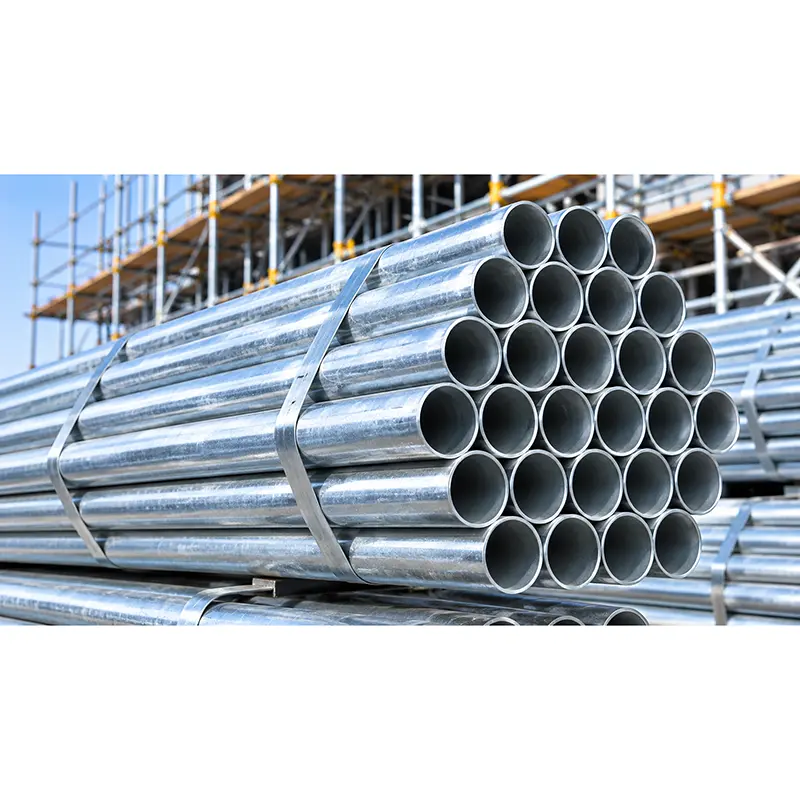
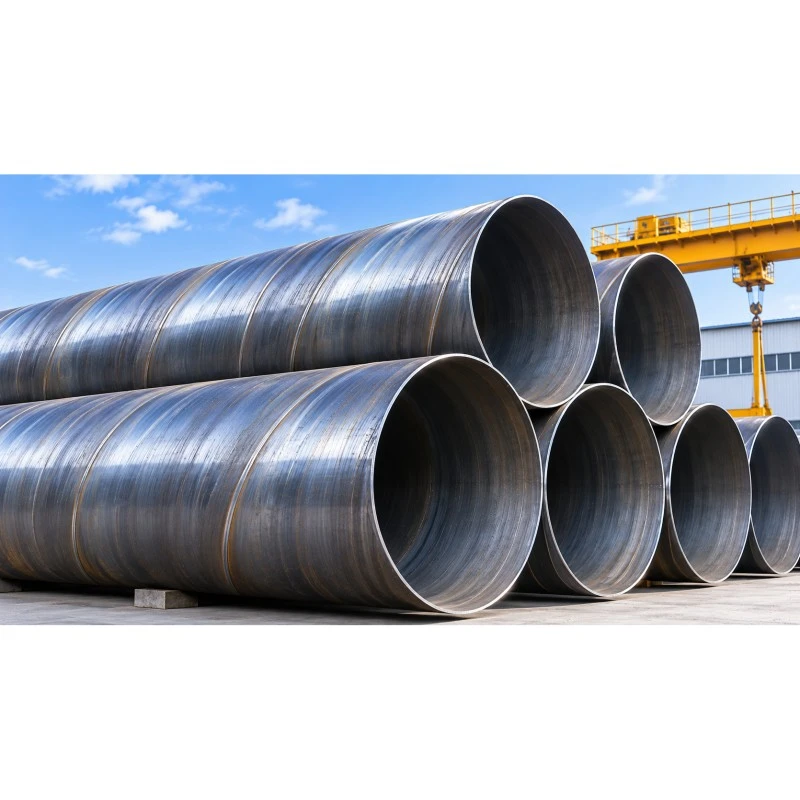
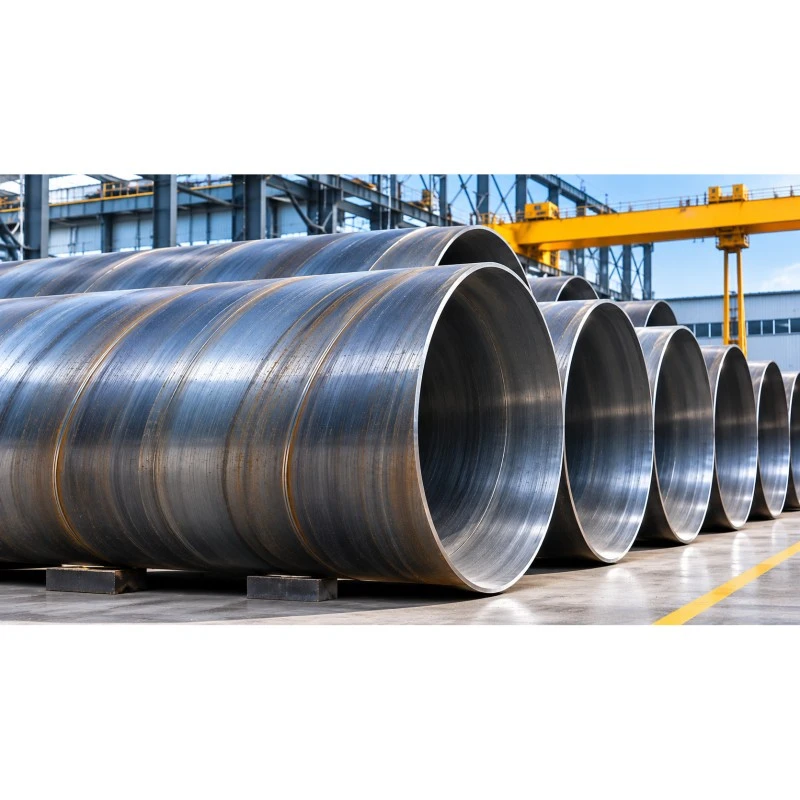
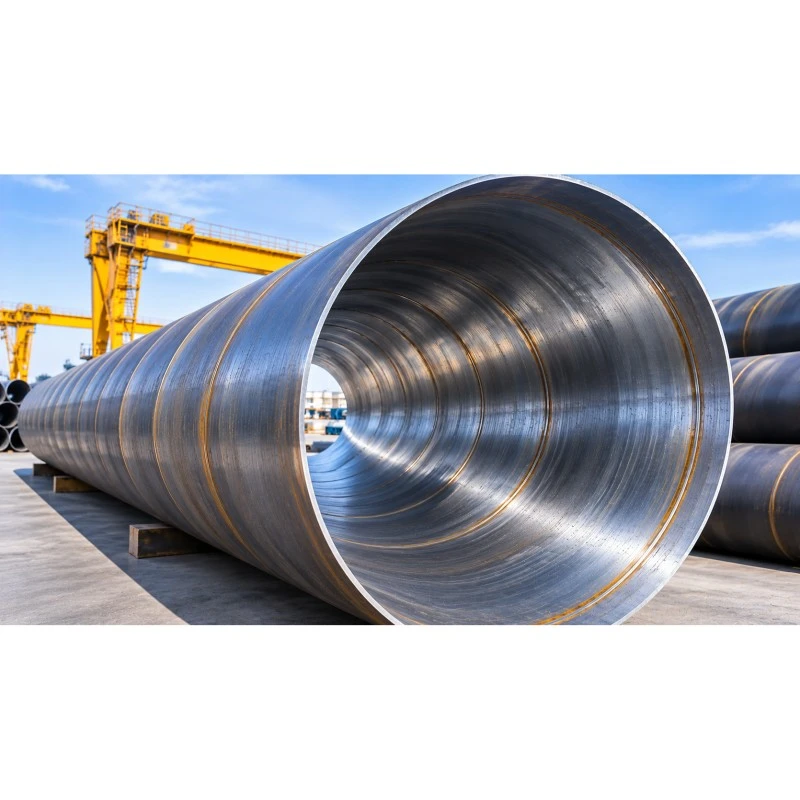
Baiyili factory supplies Spiral Welded Pipe for water transmission, municipal pipeline networks, infrastructure construction and foundation projects. Manufactured by forming steel coil into a cylindrical shape and joining the edges through submerged arc welding, this pipe production method is suitable for a wide range of large-diameter specifications.
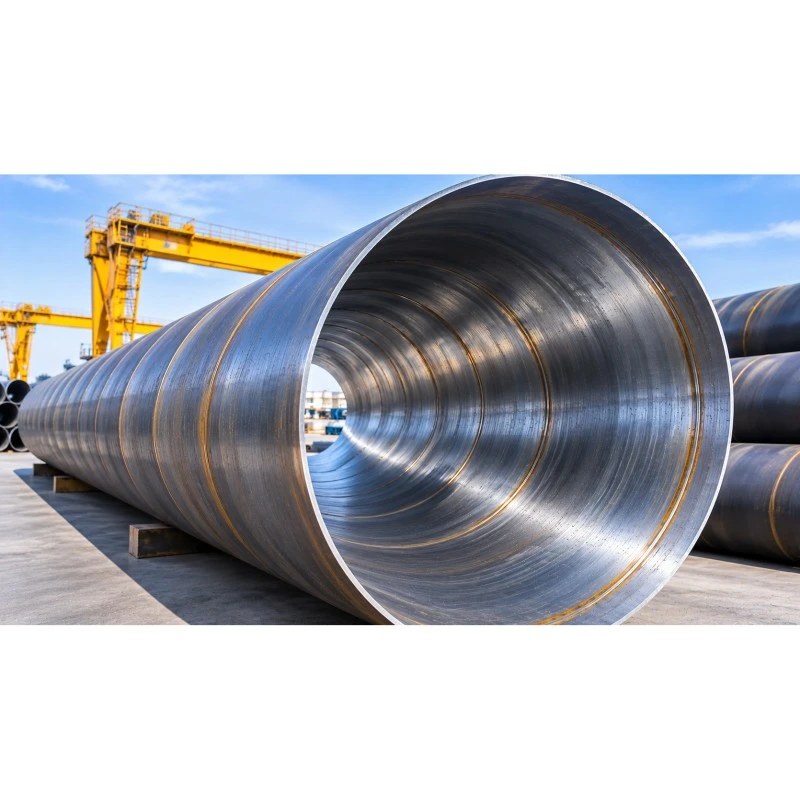
Unlike straight-seam welded pipe, the weld seam follows a spiral path along the pipe body. This forming method allows the pipe diameter to be adjusted through the combination of steel strip width and forming angle, making it suitable for producing large-diameter pipes from steel coils.
Available material options include Q235B, Q355B and selected pipeline steel grades such as L245, L290 and API 5L grades. Depending on the intended service and applicable specification, the pipe can be supplied with a black surface or anti-corrosion systems such as 2PE, 3PE, epoxy coal-tar coating and internal epoxy lining.
Spiral Welded Pipe, also called spiral steel pipe or spiral submerged arc welded pipe (SSAW), is a welded steel tube manufactured from hot-rolled steel strip or coil. During production, the strip enters a forming unit and is shaped into a continuous spiral tube. The adjoining edges are then welded using submerged arc welding.
In the double-sided submerged arc welding process, welding is performed on both the inner and outer sides of the spiral seam using welding wire and granular flux. The welding process and inspection requirements are determined by the applicable product standard and purchase specification.
The spiral forming method makes it possible to produce large pipe diameters using steel strip of a suitable width. Final pipe dimensions, wall thickness, material grade and weld quality must meet the requirements specified for the intended application.
| Item | Parameters |
|---|---|
| Product Name | Spiral Welded Pipe / Spiral Steel Pipe |
| Manufacturer | Tianjin Baiyili New Energy Technology Co., Ltd. |
| Material Options | Q235B, Q355B, L245, L290, API 5L Grade B, X42–X70 |
| Outside Diameter | 219–3,200 mm |
| Wall Thickness | 6–26 mm |
| Standard Lengths | 6 m, 9 m, 12 m; custom lengths subject to confirmation |
| Surface Options | Black bare pipe, 2PE, 3PE, epoxy coal-tar coating, internal epoxy coating |
| Processing Options | Cut-to-length, beveling, end preparation, anti-corrosion coating |
| Reference Standards | GB/T 9711, API 5L; EN 10217 subject to product type and specification |
| Main Applications | Water transmission, municipal drainage, pipeline engineering, bridge and foundation piling |
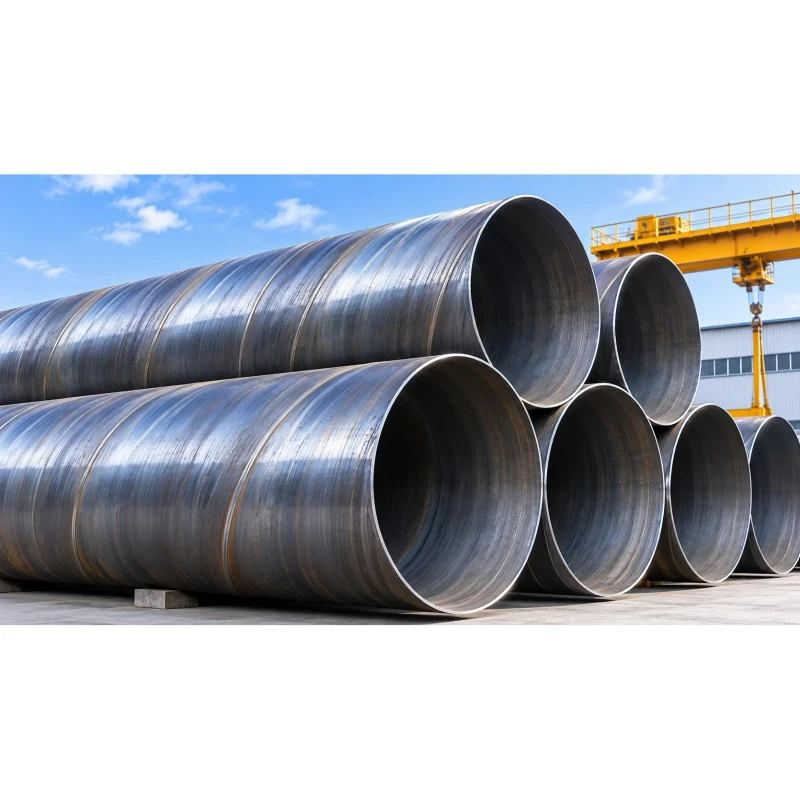
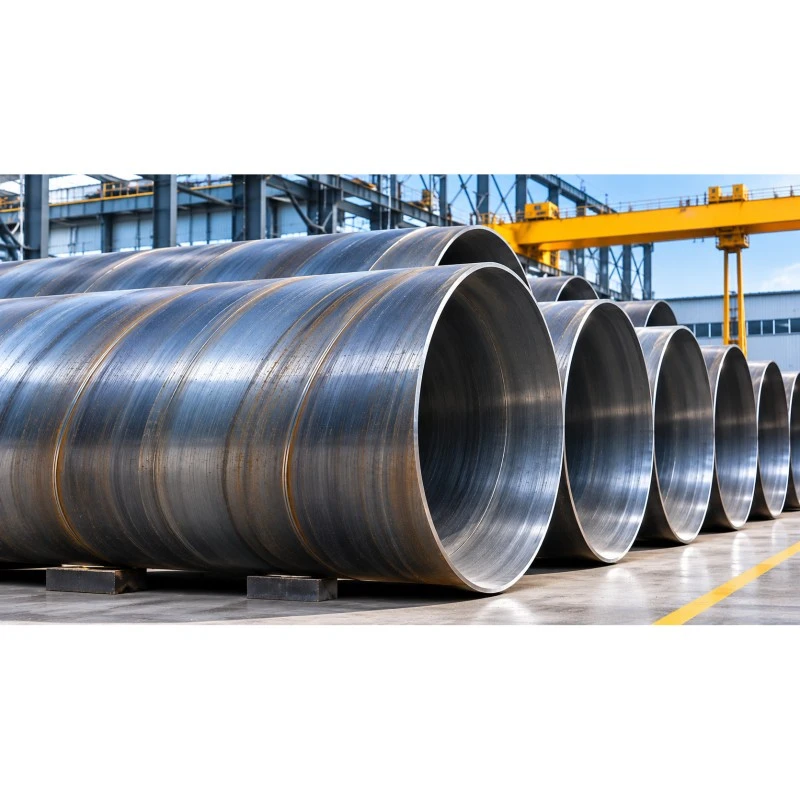
The listed material grades and standards are not interchangeable. The applicable grade, manufacturing requirements, testing scope and acceptance criteria should be confirmed for each order. The stated diameter and wall thickness ranges should also be checked against the available production combinations.
Hot-rolled steel coil is selected according to the required pipe grade, dimensions and applicable production specification. Incoming material requirements may include verification of material identification and supporting documentation.
The steel strip is fed into the forming equipment and shaped continuously at a controlled angle. The forming angle and strip width determine the resulting pipe diameter and spiral seam geometry.
The formed tube edges are joined through submerged arc welding. Welding parameters, consumables and process controls are selected according to the required pipe specification. Welding is carried out on both the inner and outer sides of the seam.
The continuous pipe is cut into the specified lengths. Beveling and other end preparation can be arranged according to the project connection and installation requirements.
Inspection is performed according to the applicable standard and order requirements. Where specified, non-destructive testing, hydrostatic testing and coating inspection can be included. Anti-corrosion coating is applied according to the selected coating system and project specification.
The spiral forming process is suitable for producing large-diameter steel pipes from steel coil. This makes it an option for water transmission, drainage networks and other infrastructure projects requiring large pipe dimensions.
The combination of strip width and forming angle allows different outside diameters to be produced. Pipe diameter, wall thickness and length should be confirmed together to ensure that the selected combination meets production and project requirements.
The inner and outer welds are produced through submerged arc welding. Weld quality depends on material condition, welding procedures, process control and inspection against the specified acceptance criteria.
Q235B and Q355B are available as structural steel options, while L245, L290 and API 5L grades are relevant to specified pipeline applications. Material selection should follow the required standard, mechanical properties and service conditions.
Depending on the project, Spiral Welded Pipe can be supplied with external 2PE or 3PE coating, epoxy coal-tar coating or internal epoxy coating. The coating system should be selected according to the transported medium, soil conditions, water environment and applicable project requirements.
Cutting, beveling and pipe-end preparation can be specified to match installation drawings and connection methods. Processing requirements should be confirmed before production.
Large-diameter spiral welded steel pipes are used in water transmission systems, raw-water pipelines and other water infrastructure. Pipe grade, wall thickness, internal coating and testing requirements depend on the design pressure and transported water conditions.
Applications include municipal drainage networks, stormwater pipelines and related underground infrastructure. External corrosion protection and joint design should be considered according to soil conditions and installation requirements.
For oil and gas transportation, pipeline steel grades and manufacturing requirements must comply with the applicable pipeline specification, such as API 5L or GB/T 9711. The selected pipe must meet the project's requirements for grade, dimensions, pressure design, weld inspection and testing.
Spiral welded steel pipe can be used as foundation pile casing or as a structural pile component in bridge, wharf and other infrastructure projects. Section dimensions, steel grade and wall thickness should be determined according to the structural design and site conditions.
Applications include foundation and support structures for wharves and other waterfront projects. The external protection system should be selected according to exposure conditions, including immersion, splash zones and soil contact where applicable.
Before purchasing Spiral Welded Pipe, confirm the following technical details:
Identify whether the pipe is intended for water transmission, drainage, oil and gas transportation, piling or another structural application. The application determines the relevant material standard, testing requirements and corrosion protection.
Specify the required outside diameter, nominal wall thickness and length. For pressure pipelines, these dimensions must be checked against design pressure, operating conditions, material properties and the applicable design code.
Q235B and Q355B are structural steel grades, while L245, L290 and API 5L grades are associated with pipeline specifications. Confirm the exact grade designation and standard rather than treating these options as equivalent.
Specify whether the order requires weld non-destructive testing, hydrostatic testing, dimensional inspection, mechanical testing or other checks. The testing scope and acceptance criteria should follow the applicable standard and project specification.
For underground pipelines, consider soil corrosivity, moisture and installation conditions. For water transmission, confirm compatibility between the internal coating and transported medium. Specify the coating type, required thickness, surface preparation and inspection criteria.
Identify whether plain ends, beveled ends or other end preparations are required. For field welding, the bevel geometry and dimensional tolerances should match the project welding procedure.
Inspection requirements for Spiral Welded Pipe should be defined by the applicable standard and purchase order. Depending on the project, the following items may be specified:
Buyers should identify required inspection reports, material certificates and third-party inspection arrangements when requesting a quotation.
Packaging and transportation arrangements depend on pipe diameter, length, weight, coating type and destination.
Packaging details, shipping method and required export documents should be confirmed for each order.
Spiral welded pipe has a helical weld seam formed from steel coil. Straight-seam welded pipe has a longitudinal weld. The suitable type depends on diameter, specification and project requirements.
Yes. It can be used for foundation pile casing or structural pile applications, subject to the required dimensions, material grade and structural design.
Options include 2PE, 3PE, epoxy coal-tar coating and internal epoxy coating, subject to the required pipe specification and coating arrangement.
Testing can be specified according to the applicable standard and purchase order. Confirm the required test methods, inspection coverage and acceptance criteria before ordering.
Provide the outside diameter, wall thickness, length, material grade, applicable standard, coating requirements, quantity and destination. Project drawings and inspection requirements are also helpful.
For a quotation from Baiyili, provide your required pipe diameter, wall thickness, steel grade, length, coating system and order quantity. For pipeline or infrastructure projects, include the applicable standard, operating conditions, inspection requirements and technical drawings so the product specification can be reviewed before production.
Address
Cai Gongzhuang Industrial Zone, Jinghai District, Tianjin, China
Tel