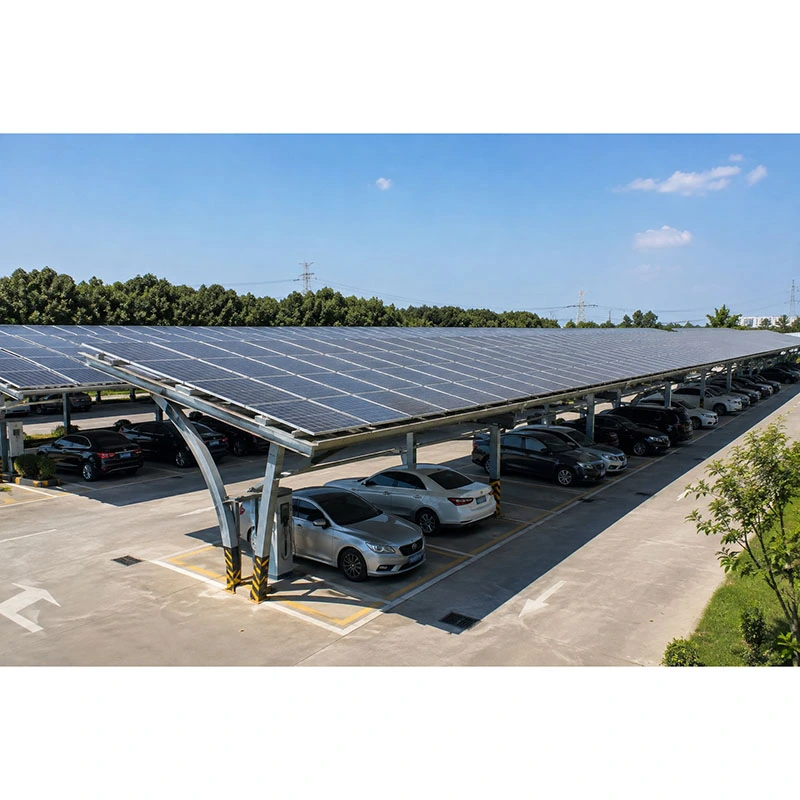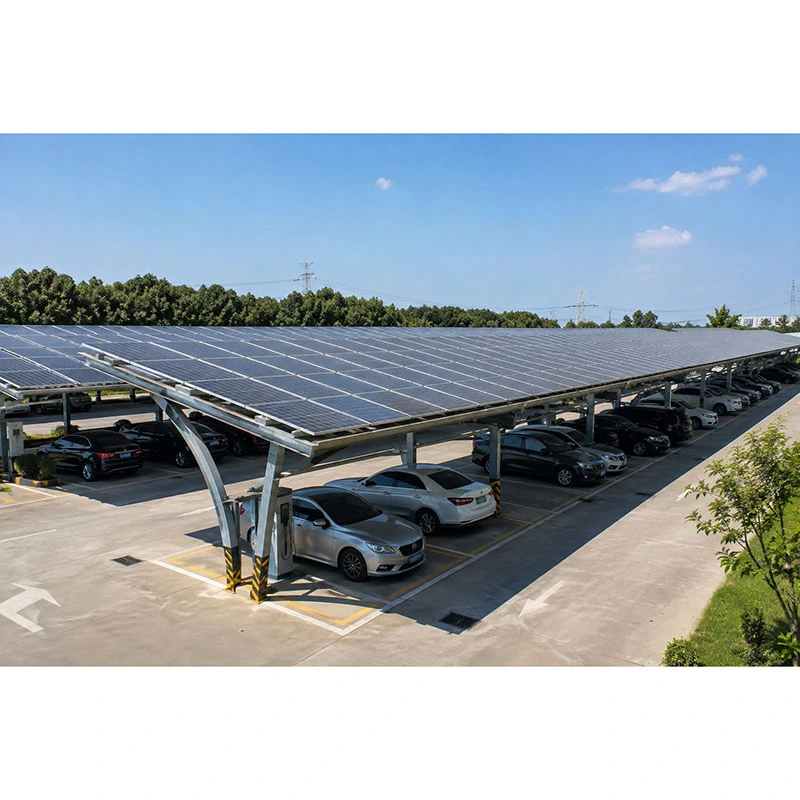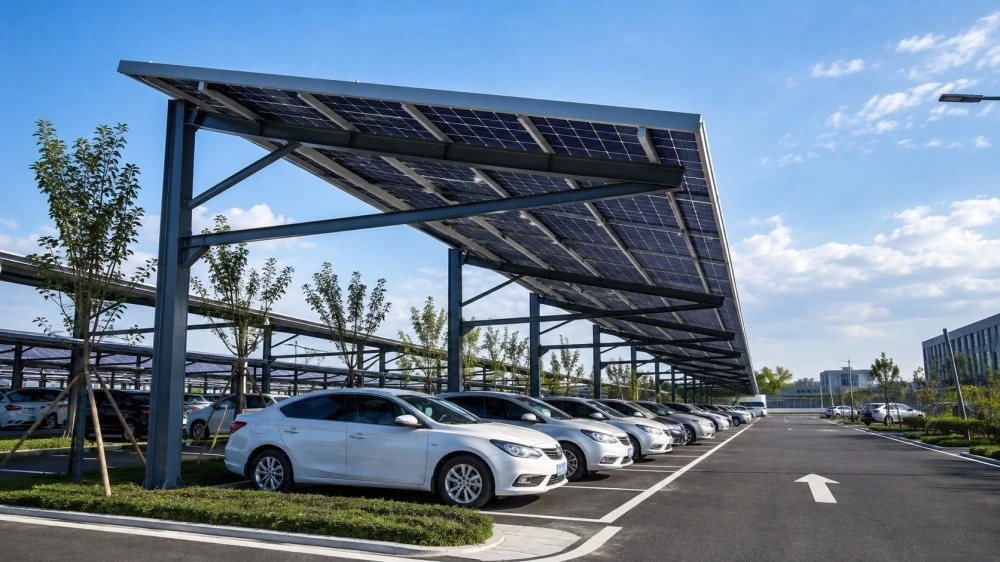
Parking, PV generation and EV charging have to be planned around the same site layout, rather than treated as unrelated installations. Baiyili, a China-based supplier, configures the Integrated Charging Station with Photovoltaic Car Shelter around parking capacity, charging demand, grid access and the required canopy clearance.
The system combines a steel canopy, photovoltaic modules, power-conversion equipment, electrical distribution and charging terminals. Depending on the project, the configuration can also include battery storage and a hybrid inverter. The final equipment selection depends on the site's electrical capacity, vehicle charging patterns and intended operating mode.
| Specification | Details |
|---|---|
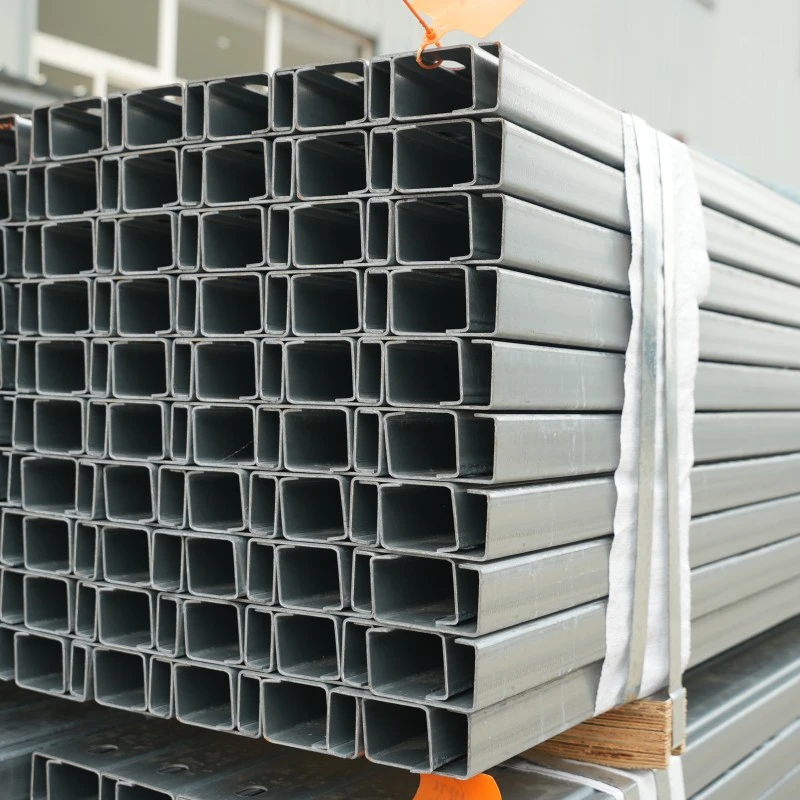
| Main Frame Material | Q355B steel with hot-dip galvanized or Zn-Al-Mg coating; aluminum alloy optional |
| PV Module Options | 410–700 W monocrystalline or bifacial modules |
| PV Installed Capacity | 15–600 kW, customized by project |
| AC Charging Option | 7–22 kW |
| DC Fast Charging Option | 60–240 kW |
| Clear Parking Height | 2.8–4.0 m, configurable |
| Grid Configuration | Grid-connected / hybrid with storage / off-grid, subject to system design |
| Energy Storage | Optional LFP battery system |
| Wind and Snow Loads | Designed according to local requirements |
| Typical Applications | Industrial parking, commercial sites, office compounds and fleet depots |
The final system configuration depends on parking layout, vehicle clearance, grid capacity, charging demand and applicable local requirements.
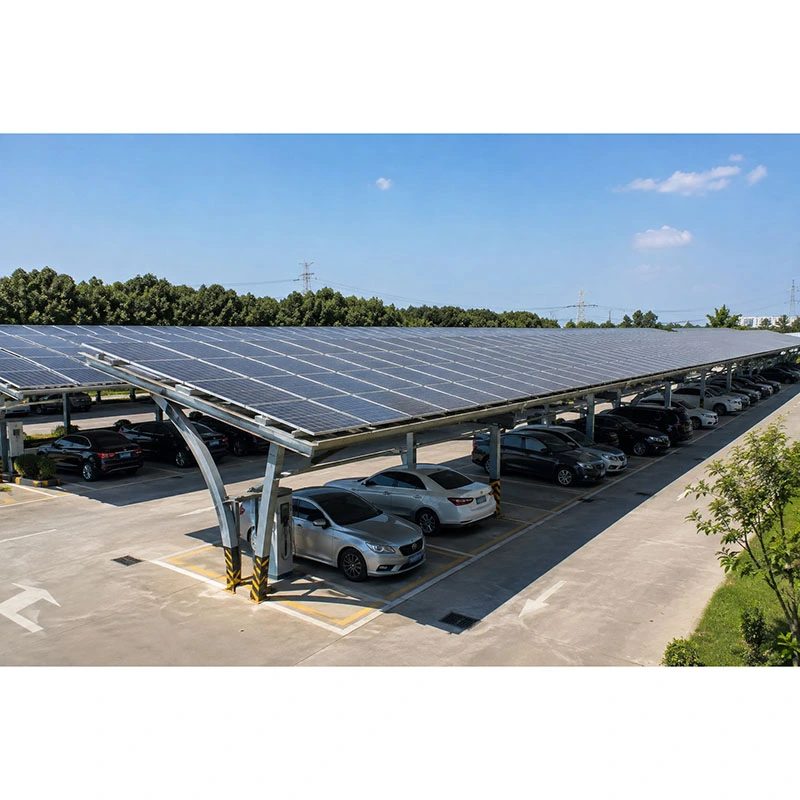
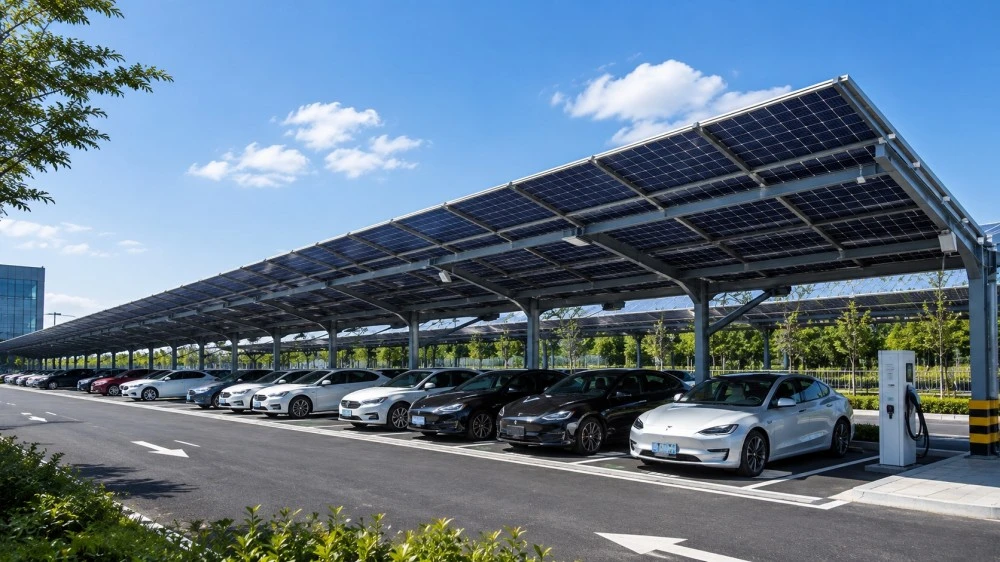
The Integrated Charging Station with Photovoltaic Car Shelter brings together the parking structure, PV array, inverter, distribution equipment and EV charging points in one coordinated project.
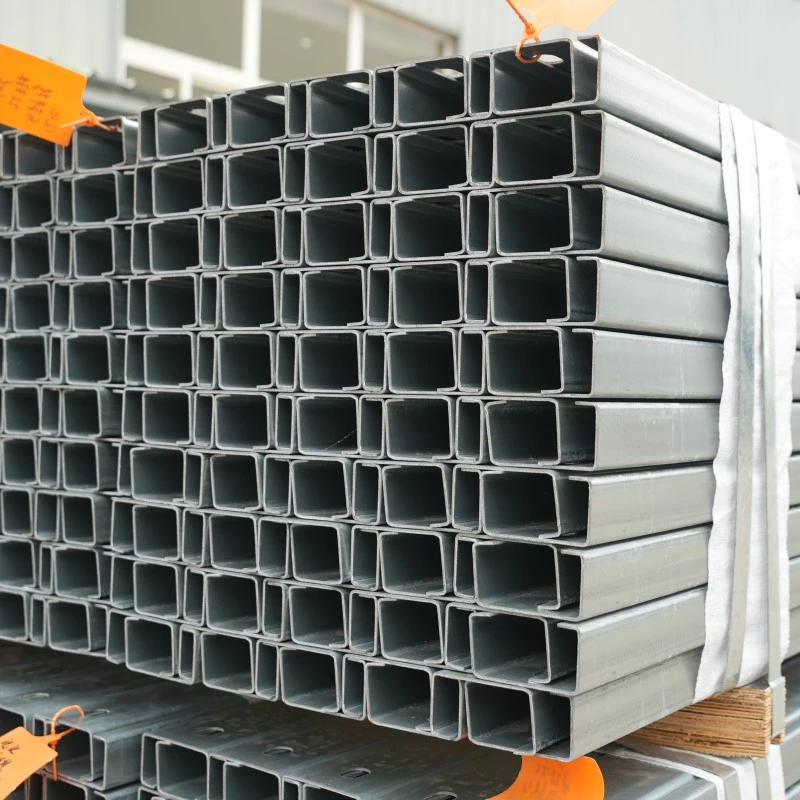
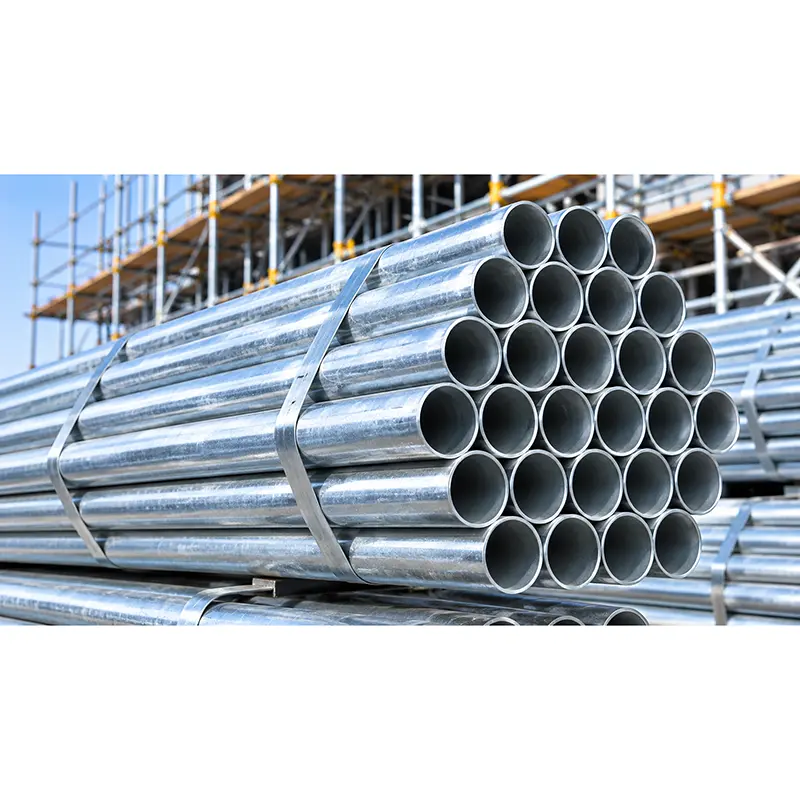
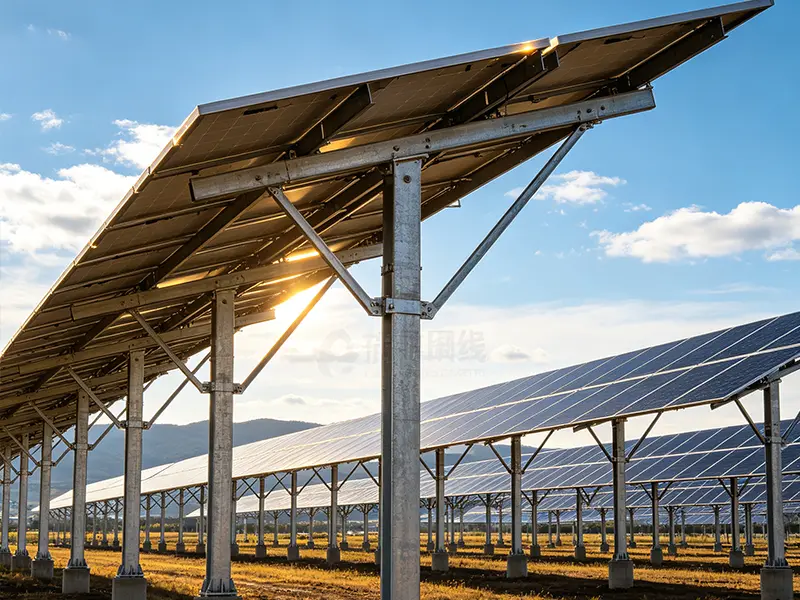
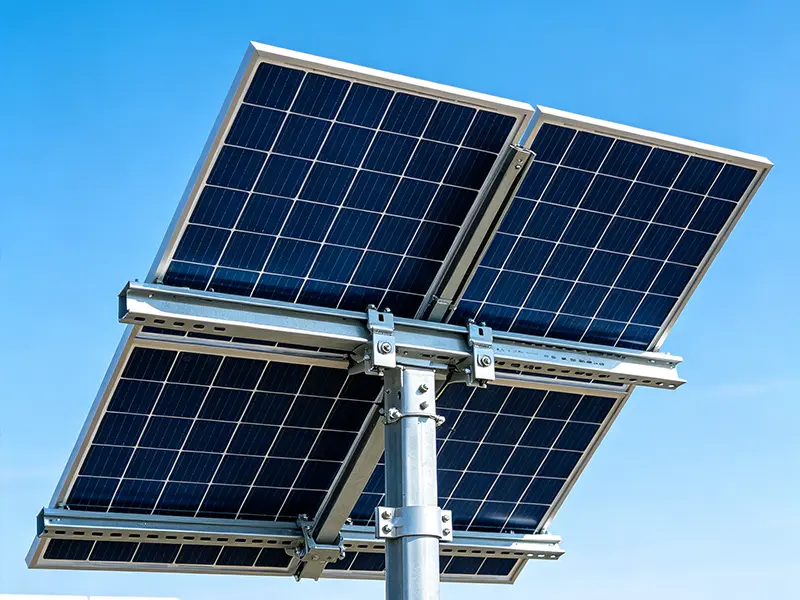
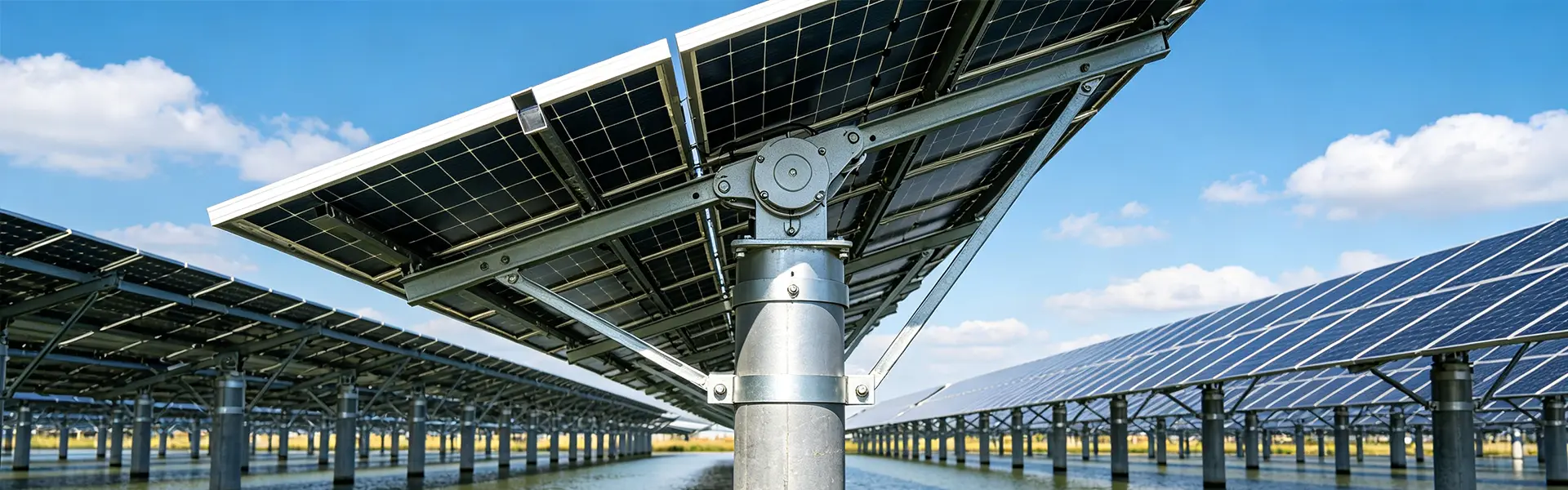
Canopy and PV modules: The steel frame supports the photovoltaic array above the parking area. The supplied specifications list Q355B steel with hot-dip galvanized or Zn-Al-Mg protection, with aluminum alloy available as an option.
Power conversion and distribution: PV modules generate DC electricity. Depending on the electrical configuration, a combiner box collects the output before the inverter converts it to AC power. The distribution cabinet then routes electricity to the charging equipment and other designated loads.
EV charging: The system can be configured with 7–22 kW AC chargers or 60–240 kW DC fast chargers. The appropriate choice depends on vehicle dwell time, charging demand and available electrical capacity.
Grid and storage options: A grid-connected system can use utility power to supplement PV generation where the electrical design permits. Optional lithium iron phosphate (LFP) storage can be considered for hybrid configurations or projects designed for off-grid operation.
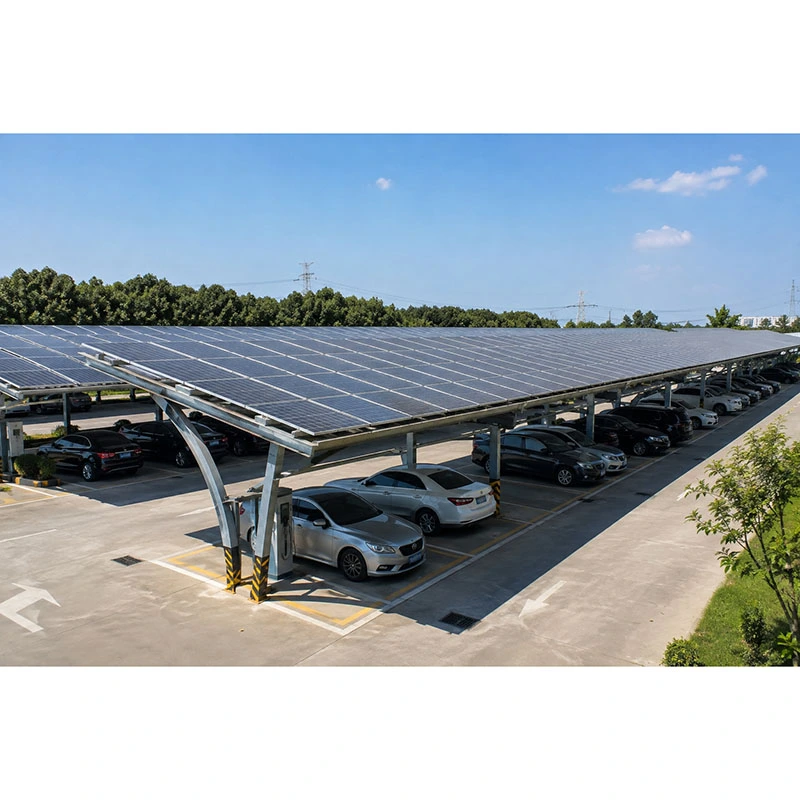
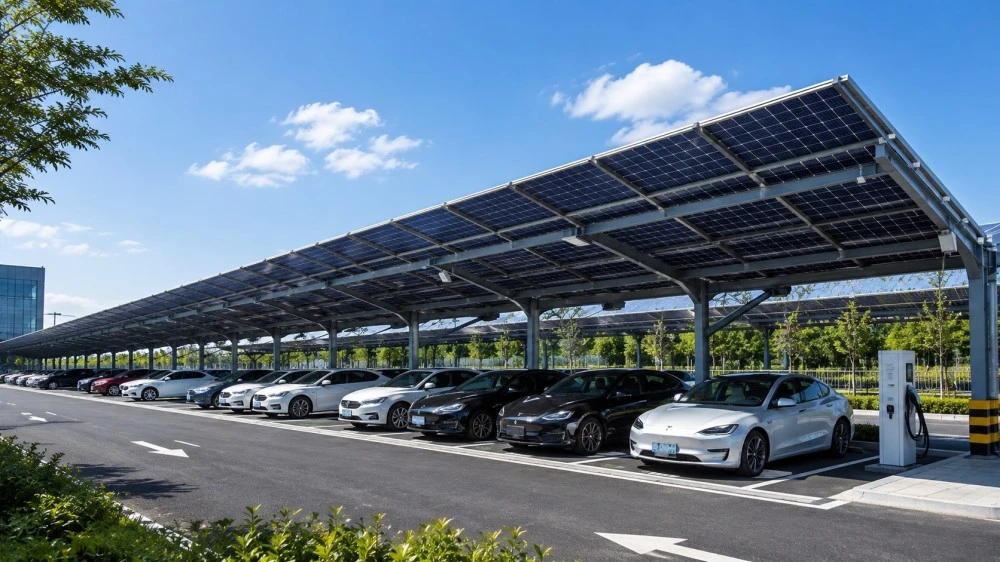
For workplace and commercial parking, the Integrated Charging Station with Photovoltaic Car Shelter can be configured around parking duration, charging demand and available grid capacity.
The right configuration depends on the actual load profile. PV capacity should not be selected from parking space alone; expected charging demand and the available grid connection also matter.
Structural design: The canopy frame and foundations need to be designed for the relevant wind and snow loads, with consideration given to PV module weight and local site conditions.
Electrical capacity: Inverter capacity, charger ratings, distribution equipment and grid supply must be coordinated to suit the intended operating mode.
Cable routing and protection: Cable paths, distribution equipment, grounding and lightning protection should be addressed in the electrical design. Enclosure protection ratings and electrical components must be specified for the installation environment.
Drainage and vehicle clearance: Roof drainage, parking height and vehicle movement should be considered when finalizing the canopy layout.
Baiyili's supplied project information describes coordinated planning for the steel frame, PV array, charging points and distribution equipment. Project design can take parking quantity, local solar conditions, charging demand and grid access into account.
Depending on the agreed scope, project documentation may include structural calculations, material certificates, electrical safety documentation and installation guidance. The availability of specific reports and the applicable warranty terms should be confirmed before order placement.
1. Can the Integrated Charging Station with Photovoltaic Car Shelter operate without a grid connection?
Off-grid operation requires a system designed with a compatible inverter and sufficient energy storage for the expected loads and operating period. A grid-connected configuration works differently and may use utility power to supplement PV generation when required.
2. Will EV charging depend entirely on real-time solar generation?
Not necessarily. In a suitable grid-connected configuration, utility power can supplement the solar supply, provided the grid connection and electrical system have sufficient capacity. The power-sharing arrangement depends on the selected system configuration.
3. Can an existing parking lot be converted into a solar charging area?
A retrofit may be possible after assessing the site layout, foundations, parking clearance, electrical supply and grid connection. These checks help establish whether the proposed canopy and charging arrangement is suitable.
4. Which charging power options are available?
The supplied specifications list 7–22 kW AC chargers and 60–240 kW DC fast chargers. The selection depends on vehicle requirements, charging duration, site capacity and the intended use of the parking facility.
5. Can battery storage be included?
Yes, an LFP battery system is listed as an optional configuration. Battery capacity and inverter sizing should be matched to the expected charging load and the intended operating mode.
6. How are waterproofing, drainage and lightning protection addressed?
Roof drainage, grounding, lightning protection, cable routing and suitable electrical enclosure ratings should be specified in the project design. The actual components and protection ratings should be confirmed for the selected configuration and local requirements.
Share your parking layout, number of spaces, expected charging demand and grid-connection conditions with Baiyili to discuss a suitable PV carport and EV charging configuration.
Address
Cai Gongzhuang Industrial Zone, Jinghai District, Tianjin, China
Tel