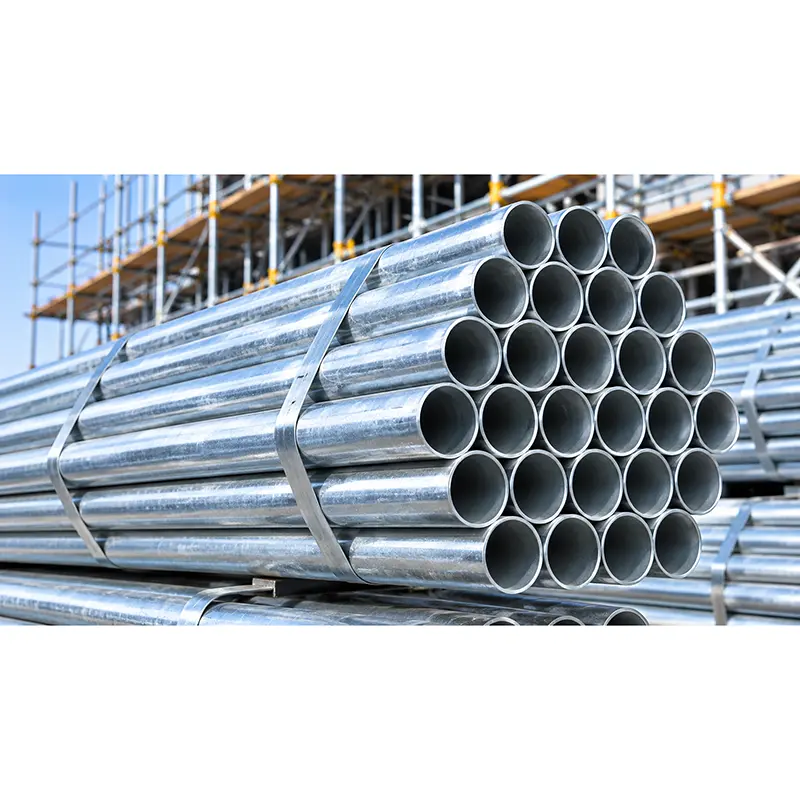
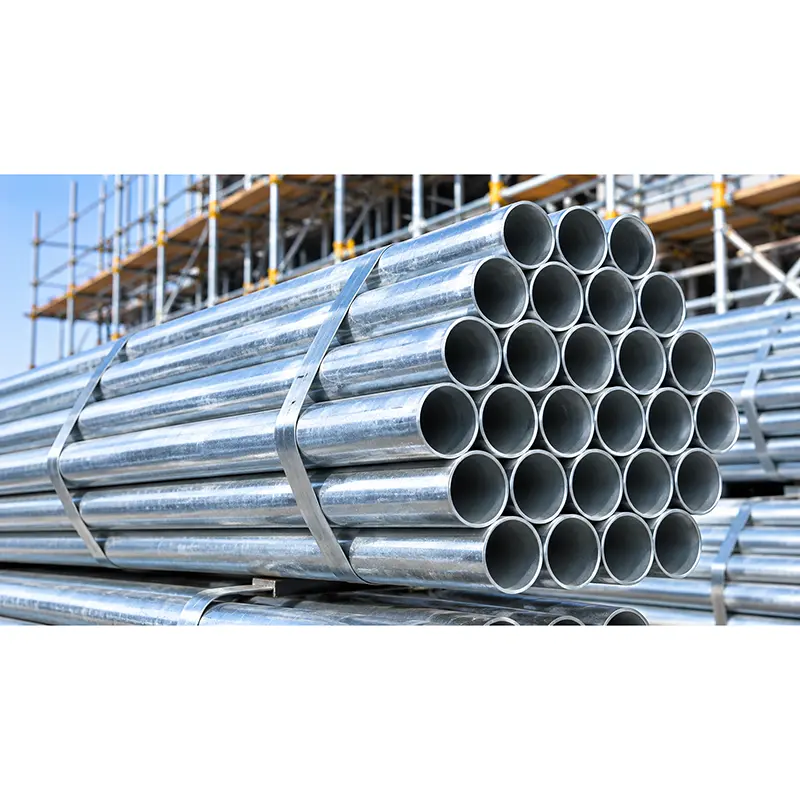
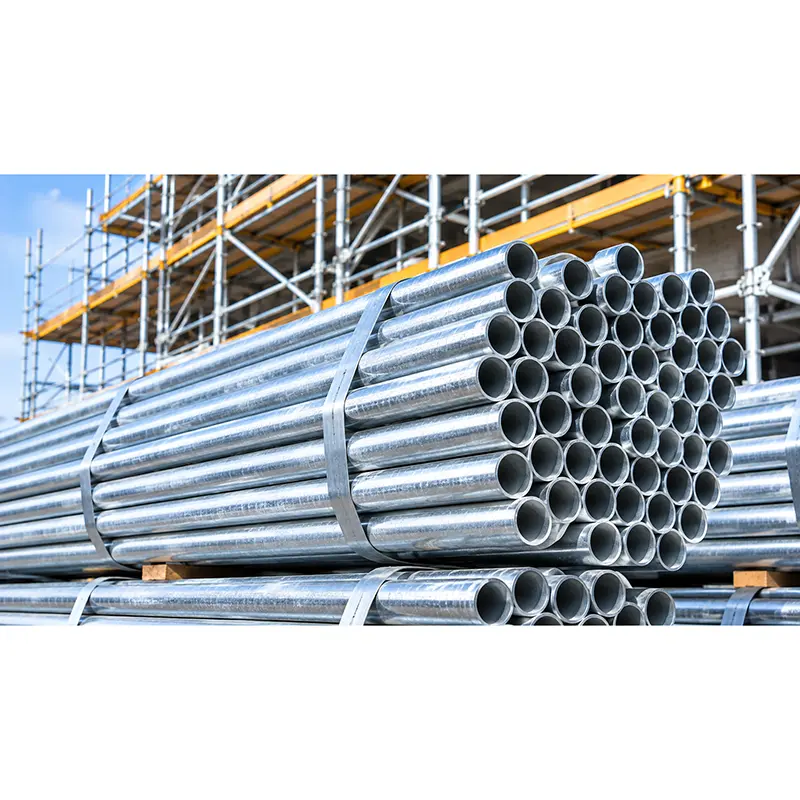
On a construction site, a Scaffolding Steel Pipes is not an independent load-bearing solution. Its performance depends on how it connects with couplers, how the standards and ledgers are arranged, and how the complete scaffold is braced, supported and anchored.
Baiyili factory’s Scaffolding Steel Pipe is intended for use as a tubular member in temporary access and support structures. Its 48.3 mm outside diameter is a commonly specified size for tube-and-coupler scaffolding. The tube can be used as a vertical standard, horizontal ledger, transom or diagonal brace when its dimensions and material meet the scaffold design requirements.
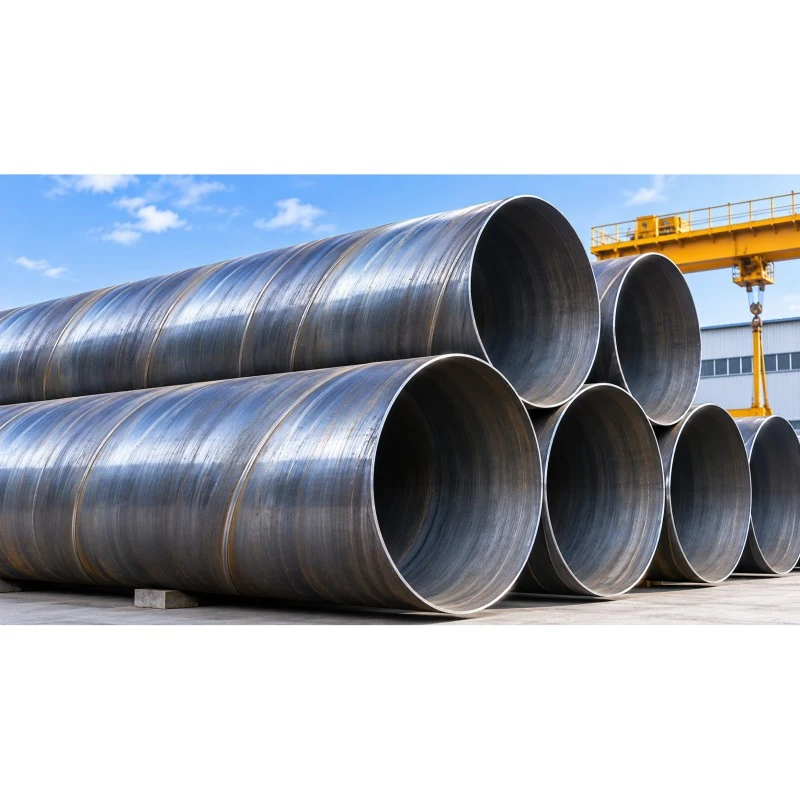
The pipe is manufactured from steel strip through forming and high-frequency resistance welding. After forming, straightening, sizing and cutting operations are carried out according to the required dimensions. Pipe ends can be processed to provide square cuts and remove burrs for handling and assembly.
For projects where surface corrosion protection is required, buyers can specify painted or hot-dip galvanized finishes. The selected finish should be considered together with the intended service environment, storage conditions and expected reuse cycles.
| Item | Available Specification |
|---|---|
| Product Name | Scaffolding Steel Pipe |
| Manufacturer | Tianjin Baiyili New Energy Technology Co., Ltd. |
| Outside Diameter | 48.3 mm |
| Material Options | Q235B, Q355B |
| Common Wall Thicknesses | 2.5, 2.75, 3.0, 3.2, 3.5, 3.6 mm |
| Common Lengths | 1, 2, 3, 4, 5, 6 m |
| Length Processing | Cut-to-length, subject to confirmation |
| Surface Finishes | Black paint, yellow warning paint, hot-dip galvanizing |
| Pipe-end Processing | Square cutting, end finishing and deburring |
| Reference Standards | EN 39, BS 1139; applicable Chinese material and product standards to be confirmed |
Important specification note: A 48.3 mm outside diameter alone does not establish compliance with EN 39 or BS 1139. These standards define additional requirements for dimensions, material properties, tolerances, testing and marking. For example, EN 39 includes 3.2 mm and 4.0 mm tube types, while the traditional BS 1139-1.1 specification describes a 48.3 mm outside diameter and 4.0 mm nominal wall thickness. Confirm the required standard and tube type before ordering.
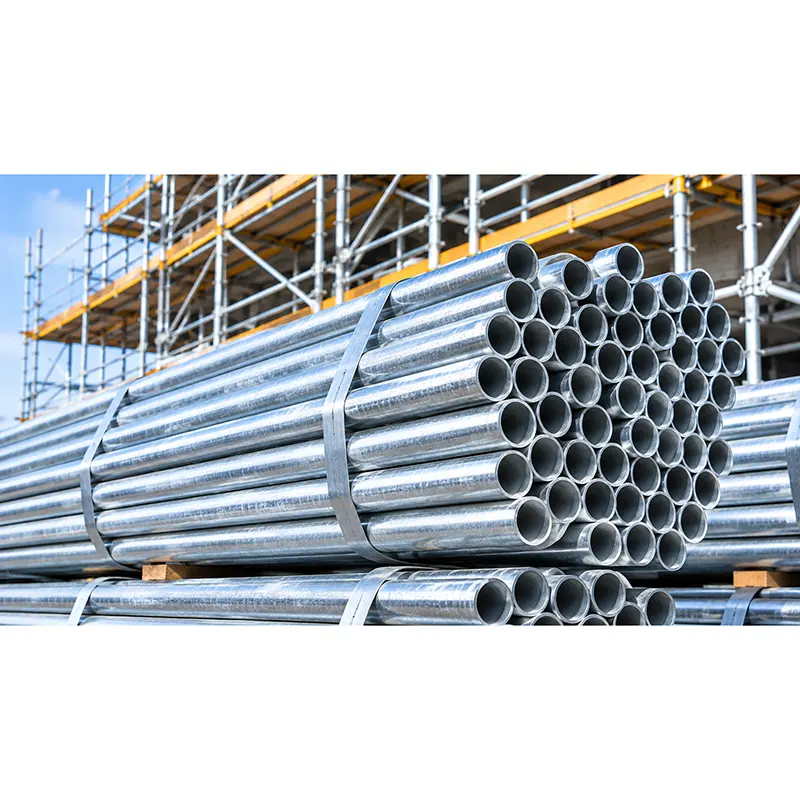
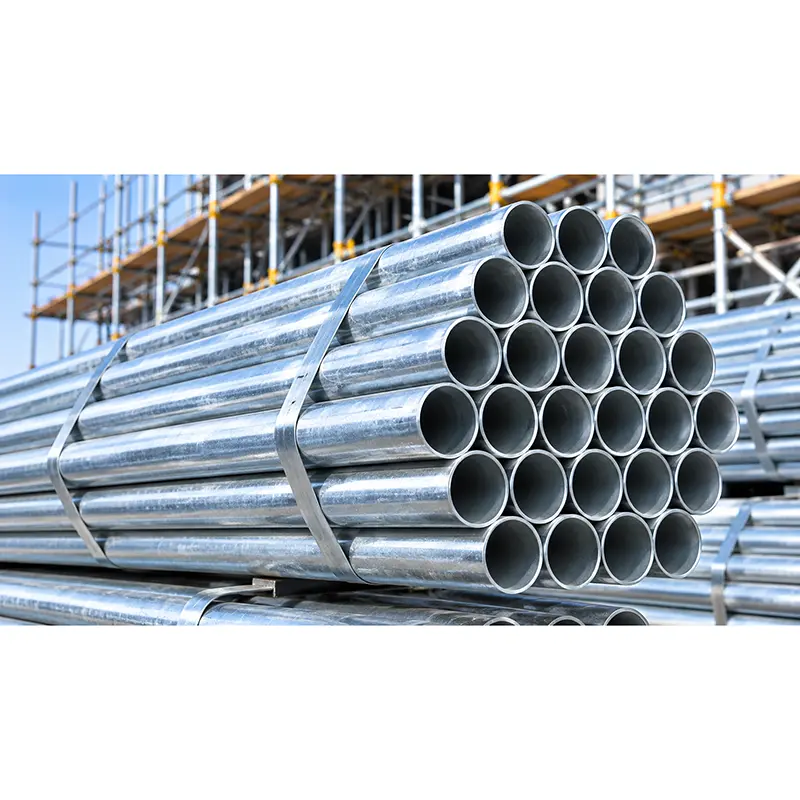
The first purchasing decision is usually the wall thickness. A 48.3 mm tube with a 2.5 mm wall and one with a 3.6 mm wall have different unit weights and section properties. They should not be treated as interchangeable simply because their outside diameters are the same.
Material grade is another consideration. Q235B and Q355B have different specified yield strengths and belong to different material standard systems. A higher-strength grade does not automatically make a thinner tube suitable for a scaffold designed around a different tube specification. The scaffold designer must check the actual tube properties, member lengths, connection details and loading conditions.
Length should also match the scaffold layout. Common 1–6 m lengths can be used for different member arrangements, but the required cut lengths depend on bay dimensions, lift heights, bracing layout and connection positions. Providing a cutting schedule can help reduce unnecessary on-site cutting.
| Project Requirement | Points to Confirm |
|---|---|
| General building access scaffolding | Tube diameter, wall thickness, tube length and coupler compatibility |
| Exterior wall work | Scaffold design, tie arrangement, bracing, surface finish and exposure conditions |
| Formwork support | Design loads, member spacing, support layout and applicable falsework requirements |
| Bridge and infrastructure work | Structural design, tube grade, wall thickness, connection details and inspection requirements |
| Coastal or humid locations | Galvanizing specification, coating condition, storage and maintenance requirements |
| Export projects | Destination-market standard, tube type, marking, inspection and documentation |
Scaffolding Steel Pipe is commonly specified for temporary structures where circular steel tubes are connected by compatible fittings.
The finish affects how the tube performs during storage, handling and repeated use. It should be selected according to the expected exposure and maintenance arrangements.
A painted surface provides a basic protective layer for general construction use. Paint condition can deteriorate through abrasion, impact and repeated handling, so damaged areas should be inspected and recoated where necessary.
Yellow paint can be specified where a visible warning color is required by the site or project. The color is a surface identification choice and does not replace the scaffold's structural or safety requirements.
Hot-dip galvanizing provides a zinc coating that protects the underlying steel through barrier protection and sacrificial action. Coating performance depends on coating thickness, exposure conditions, handling damage and maintenance. It should not be assigned a fixed service life without project-specific environmental information.
For galvanized tubes, buyers should confirm whether galvanizing takes place before or after pipe forming and welding, as the manufacturing route affects the coating condition around the weld and pipe ends.
For project-based supply, the following details help avoid dimensional or assembly mismatches:
Baiyili can discuss fixed-length cutting and pipe-end finishing according to the confirmed order specification. Non-standard dimensions, coating requirements and processing details should be reviewed before production.
For scaffolding applications, dimensional consistency and traceability are important because tubes are assembled with compatible fittings and may be reused across multiple projects.
Inspection requirements should be agreed in the purchase order. Relevant checks may include:
Where EN 39, BS 1139 or another project standard is specified, the inspection plan should follow the relevant requirements rather than relying only on general dimensional checks.
Yes. 48.3 mm is a widely used outside diameter for tube-and-coupler scaffold tubes. Wall thickness and other requirements depend on the selected standard and tube type.
Common options include 2.5, 2.75, 3.0, 3.2, 3.5 and 3.6 mm. Confirm the required thickness and applicable standard before ordering.
They have different specified yield strengths and material requirements. The appropriate grade should be selected according to the scaffold design and applicable specification.
Yes. Hot-dip galvanized finish is one of the stated surface options. Confirm the coating requirements and manufacturing route when placing an order.
Yes. Fixed-length cutting can be discussed for the required dimensions and quantities. Provide a cutting schedule when requesting a quotation.
Specify the outside diameter, wall thickness, material grade, tube length, surface finish, quantity and required standard. Include inspection and marking requirements if the tubes are for a regulated construction project.
Send us your required Scaffolding Steel Pipe dimensions, material grade, surface finish, lengths and order quantity. If the tubes are intended for EN 39, BS 1139 or another project specification, include the required tube type and inspection criteria so the supply details can be checked before production.
Address
Cai Gongzhuang Industrial Zone, Jinghai District, Tianjin, China
Tel